





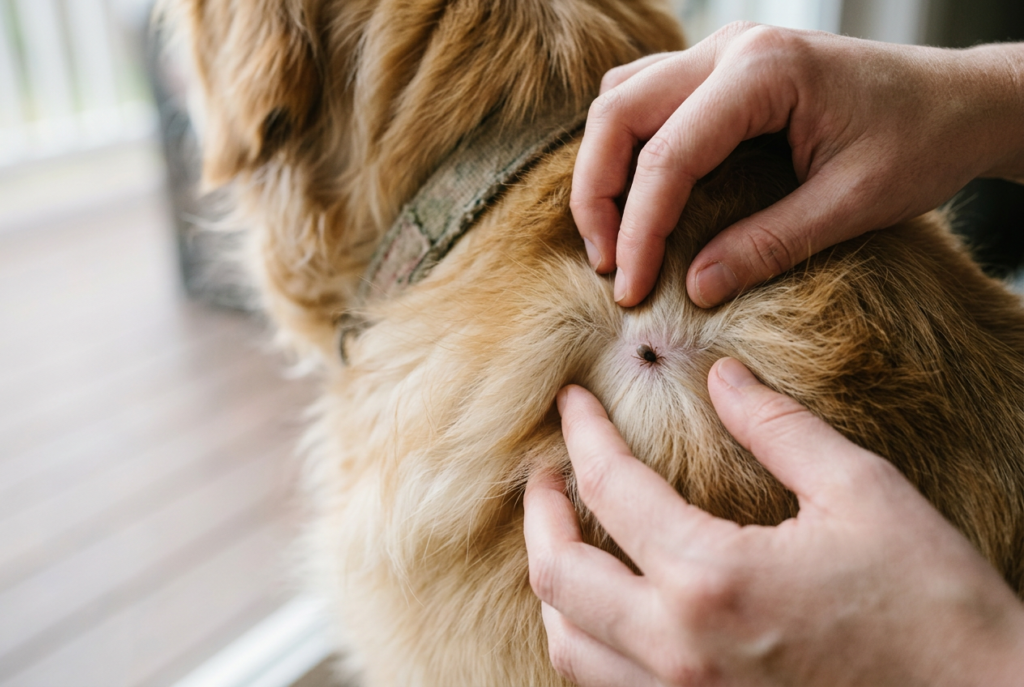
Ticks are no longer a summer-only problem. Across Europe, milder winters and expanding wildlife habitats mean ticks stay active for much of the year, and a walk through a park or garden is often enough for one to attach. Protecting your dog or cat doesn’t have to mean choosing between “chemical” and “natural”. The most effective approach is a layered one: know your local risk, check your pet after every walk, remove ticks correctly, and choose prevention that fits your animal’s health and lifestyle. Here’s how.
Why ticks are increasing across Europe
If you’re finding more ticks than you remember from childhood, you’re not imagining it. Researchers have documented a marked rise in tick activity over the past two decades, driven by several overlapping factors:
- Milder winters let ticks survive and stay active instead of going dormant.
- A warming climate has pushed tick habitats into higher altitudes and northern Europe.
- Growing wildlife populations of deer, foxes, rodents and wild boar provide abundant hosts.
- More urban green space gives ticks excellent habitat right where we walk our dogs.
The result: today’s pets meet ticks far more often than pets did twenty years ago.

The tick species that matter most for European pets
Hundreds of tick species exist, but three cause most problems for companion animals in Europe.
Ixodes ricinus (castor bean tick) is Europe’s most widespread tick. It thrives in forests, meadows and humid gardens and transmits Lyme disease, anaplasmosis and tick-borne encephalitis (the latter mainly a human concern).
Dermacentor reticulatus (ornate dog tick) has spread rapidly in recent years. Its main threat to dogs is Babesia canis, the parasite behind canine babesiosis.
Rhipicephalus sanguineus (brown dog tick) can survive and reproduce indoors, in homes and kennels, which makes an established infestation hard to eliminate.

Tick-borne diseases every pet guardian should know
The bite itself is rarely the real problem. The danger is the bacteria, parasites and viruses some ticks carry and transmit while feeding. Not every tick is infected, but you can’t tell by looking, so every bite deserves attention.
Lyme disease
Caused by Borrelia burgdorferi. Many exposed dogs never show signs, but some develop symptoms weeks or months later: shifting lameness, swollen joints, fever, lethargy, reduced appetite and enlarged lymph nodes. In rare cases the kidneys are
affected. Early veterinary diagnosis improves outcomes significantly.
Canine babesiosis
Microscopic parasites invade and destroy red blood cells, which can cause severe anaemia. Watch for weakness, pale gums, fever, dark or reddish urine, rapid breathing and, in severe cases, collapse. Babesiosis can be life-threatening without prompt treatment, and cases are rising as Dermacentor reticulatus expands its range.
Anaplasmosis
A bacterial infection spread mainly by Ixodes ricinus. Signs are easy to confuse with other illnesses: fever, joint pain, reluctance to move, lethargy, poor appetite and occasionally bruising or bleeding disorders. With early treatment the prognosis is generally very good.
Ehrlichiosis
Once largely confined to the Mediterranean, ehrlichiosis is moving north. It attacks white blood cells and can affect several organ systems. Early signs include fever, weight loss, enlarged lymph nodes, eye inflammation, nosebleeds and chronic fatigue. Left untreated it can become chronic and affect bone marrow function.
Can cats get tick-borne diseases?
Yes, though clinical disease appears less common than in dogs. Outdoor cats regularly pick up ticks and may develop local skin infections or allergic reactions, carry ticks into the home, and occasionally contract tick-borne pathogens. Because cats metabolise many substances differently, never use dog tick products on a cat without veterinary guidance.

How to check your pet for ticks
The most effective prevention costs nothing: check your pet after every outdoor outing. Many pathogens take several hours to transmit, so finding ticks early lowers the risk of infection. Pay special attention to the ears, around the eyes, under the collar, neck folds, armpits, groin, between the toes and around the tail. Long-haired pets benefit from regular brushing during peak season.
How to remove a tick safely
Removing a tick correctly matters more than removing it quickly.
- Use fine-tipped tweezers or a dedicated tick-removal tool.
- Grip the tick as close to the skin as possible.
- Pull upward with slow, steady pressure. Don’t twist, squeeze, burn or smother the tick with oil; these methods can cause it to release infectious material into the bite.
- Disinfect the bite area and monitor your pet for signs of illness over the following days.

A holistic view of tick prevention
At Pantaya, we believe health is built on balance. A resilient immune system, healthy skin, a diverse gut microbiome, speciesappropriate nutrition and thoughtful daily habits all help an animal cope with environmental challenges. Tick prevention works the same way: rather than relying on one product, combine several layers that work together.
Five natural tick repellent recipes for dogs
- Neem oil spray. Cold-pressed neem oil is one of the best-known natural insect repellents, and some research suggests its compounds may interfere with tick feeding and attachment. Mix 1 cup warm water, 1 to 2 teaspoons cold-pressed neem oil and 1 teaspoon mild liquid soap (to emulsify). Shake well and lightly mist the coat before walks, avoiding eyes, nose, mouth and broken skin.
- Cedarwood and lavender mist. Cedarwood essential oil is widely recognised for repelling insects; lavender adds a pleasant scent and is gentle on skin. Add 5 drops cedarwood and 3 drops lavender essential oil to 1 cup water. Spray lightly on the coat or bedding before outdoor activity. Always dilute essential oils and never apply them neat.
- Rosemary herbal rinse. Fresh rosemary contains aromatic compounds many insects dislike, and an infusion is gentler than a concentrated oil. Steep fresh rosemary in 500 ml boiling water, cool completely and strain. Use as a light rinse after walks or decant into a spray bottle.
- Coconut oil barrier. Coconut oil contains lauric acid, which some research suggests may discourage certain parasites from attaching. Warm a small amount between your hands and rub it onto the legs, chest, belly and neck before heading out.
- Apple cider vinegar spray. Apple cider vinegar doesn’t kill ticks, but many guardians include it in a layered routine. Mix equal parts water and apple cider vinegar and spray lightly over the coat, avoiding the eyes and nose.
Essential safety notes
Natural does not automatically mean safe. Essential oils are highly concentrated plant extracts.
- Always dilute essential oils and never apply them directly to the skin.
- Avoid the eyes, nose, mouth and sensitive areas.
- Do a small patch test before first use.
- Never use essential oils on cats unless a veterinarian specifically recommends it.

Simple daily habits that reduce tick exposure
No product replaces careful observation. Check your pet after every walk, brush long coats regularly, keep garden grass short, remove leaf litter, wash bedding often, avoid dense vegetation at peak season where possible, and learn to remove ticks correctly. Small habits done consistently make the biggest difference.
Supporting resilience from within
Fresh, balanced nutrition, a healthy body weight, a diverse gut microbiome, reduced chronic inflammation, regular exercise and lower stress all support overall wellbeing and a balanced immune system. None of these prevents a tick bite directly, but a healthy body is better equipped to cope with everyday challenges.
Eye and ear drops with nano colloidal silver for dogs and cats. Nano colloidal silver drops can be used to help soothe irritated and red eyes, inflamed ears, ear yeast issues, and for regular ear cleaning. Colloidal silver has natural antibacterial, antifungal, antiviral, and anti-inflammatory properties. Pantaya eye and ear drops with nano colloidal silver for dogs and cats are a great choice to support our pets’ eye and ear health.
Nano colloidal silver spray for dogs and cats. The spray is suitable for cuts, wounds, red and itchy skin, odour associated with fungal issues, as well as tick and other insect bites. Colloidal silver has natural antibacterial, antifungal, antiviral, and anti-inflammatory properties. It can therefore help relieve symptoms associated with allergies and sensitivities to environmental factors in dogs and cats. Pantaya nano colloidal silver spray for dogs and cats is a great choice to support our pets’ skin health and overall well-being.
Shampoo and conditioner with nano colloidal silver for dogs and cats. Suitable for pets with allergies, as well as those experiencing itchy, red, and irritated skin. Both the shampoo and conditioner are made with organic and natural ingredients and feature a refreshing lemongrass scent. The pH levels of both products are specially formulated to meet the needs of dogs and cats.